Injury-Conscious Yoga and Alignment
Starting or maintaining a yoga practice shouldn’t mean risking a trip to the physical therapist. As we focus on longevity and functional movement, the way we approach our yoga mats must evolve. For many individuals, standard, fast-paced studio classes can lead to over-tweaked joints, strained lower backs, or wrist pain.
Stepping into a safe practice requires an instructor who prioritizes precision over speed. If you are looking to build strength without the setback of injury, structuring your practice around precise alignment, professional guidance, and tailored modifications is the key to pain-free mobility.
Iyengar Yoga Alignment Cues 92130
Safety in yoga begins with understanding how your unique skeletal structure fits into a pose. This is where the foundations of Iyengar yoga become invaluable. Unlike styles that rush through transitions, an alignment-focused practice takes the time to break down the mechanics of every shape.
Using specific anatomical cues—such as tracking the knee directly over the ankle in a lunging warrior pose or spiraling the inner thighs back to protect the lower back—ensures that weight is distributed evenly across muscles rather than dumping into vulnerable joints. Utilizing props like blocks, straps, and blankets isn't a sign of weakness; it is a smart tool used by experienced practitioners to bring the floor to them, maintaining a neutral spine and optimal joint angles.
Therapeutic Yoga Instructor Carmel Valley
When dealing with chronic tightness, past surgeries, or conditions like arthritis and osteoporosis, a standard "one-size-fits-all" fitness class can do more harm than good. Working with a dedicated professional who understands the biomechanics of an aging or recovering body changes the game entirely.
A specialized instructor doesn't just call out poses; they look at how your feet press into the mat and how your shoulders rotate. They understand the relationship between core stability and spinal protection, providing a supportive environment where the goal is nervous system regulation and functional longevity rather than forcing your body into a decorative shape.
Yoga Classes for Beginners with Form Correction
The absolute biggest barrier for people wanting to try yoga is the fear that they aren't flexible enough, or that they will hurt themselves trying to keep up. True beginner-friendly classes dismantle this barrier by capping attendance or structuring the environment so the teacher can actually see every student.
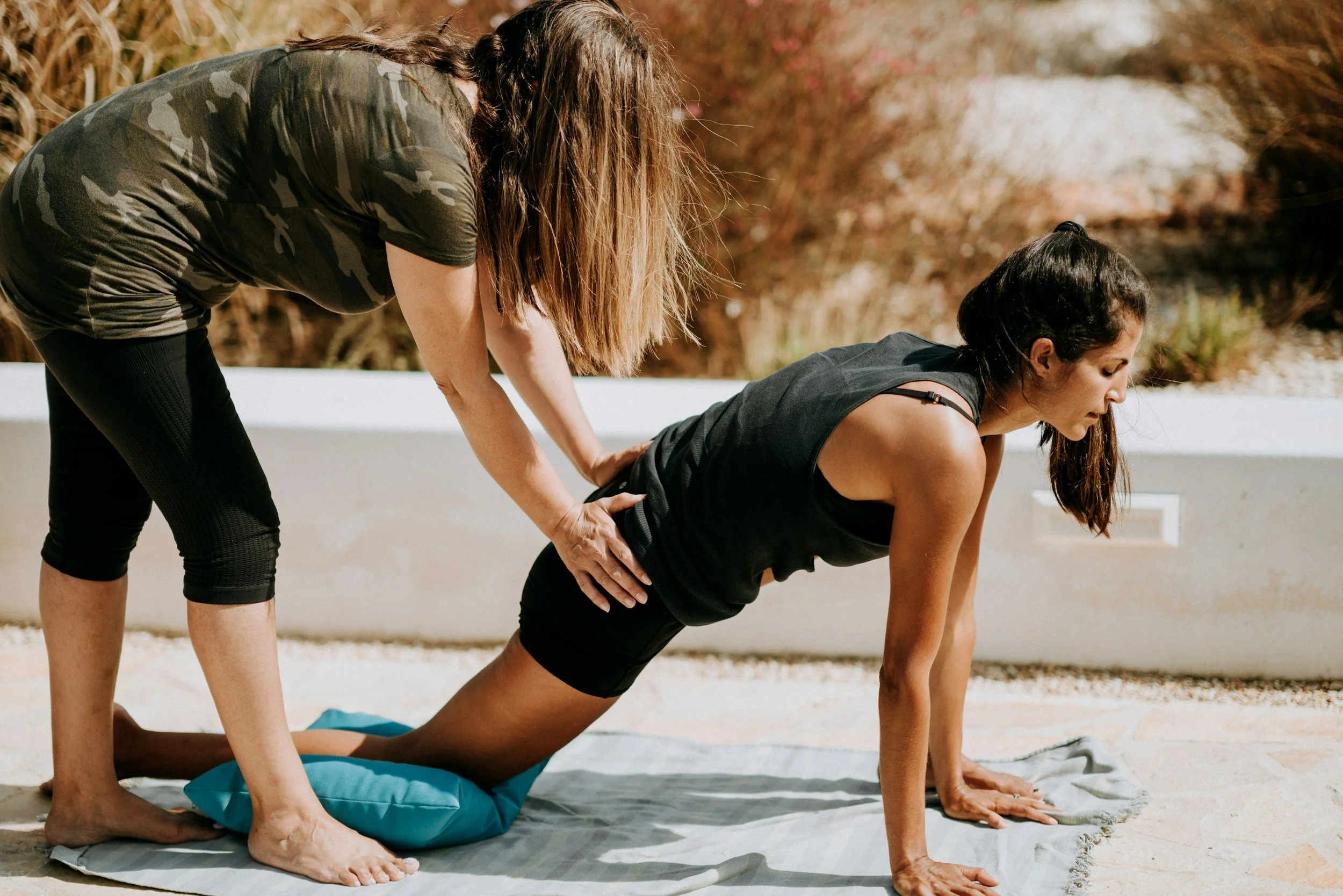
In a class that prioritizes active form correction, you can expect an instructor to offer gentle verbal adjustments or physical guidance to ensure your posture is safe. Learning how to properly modify a pose—like taking a wrist-free option on your forearms instead of a standard downward dog—empowers you to build a sustainable, lifelong practice that protects your cartilage, strengthens your bones, and restores your peace of mind.
"After throwing my back out in a fast-paced studio class elsewhere, I was terrified to try yoga again. Yoga Gal completely changed that. The real-time form corrections and personalized micro-adjustments have kept me entirely injury-free, allowing me to build deep core strength and flexibility without any pain."
— Sarah M., Carmel Valley Resident
Ready to Practice Safely? Join Yoga Gal
Don't let the fear of injury or lack of flexibility hold you back from experiencing the life-changing benefits of yoga. At Yoga Gal, our small-group settings ensure you get the individualized attention, direct feedback, and hands-on adjustments you need to move with absolute confidence.
Whether you are stepping onto the mat for the very first time or recovering from an injury, our specialized classes are designed to meet your body exactly where it is today. Protect your joints, build functional strength, and discover a sustainable way to move. Visit the Yoga Gal Homepage to browse our current class schedule and reserve your spot in our upcoming introductory sessions.